Timeless is one of the most overused words in interiors. According to the Oxford Dictionary definition, timeless is,
"something not affected by the passing of time or changes in fashion."
Usually well-intentioned, it seems to have become a blanket term for neutral, inoffensive rooms designed to avoid dating over time. Timeless interiors aren’t inherently boring; however, the word has become synonymous with safe, beige and personality-free spaces…shorthand for:
No contrast
No risk
Trend avoidance (of course, a big part of creating a timeless space is to avoid trends; however, avoidance at all costs is not always a good thing)
Copying what feels accepted
Rooms designed not to offend anyone
The result is often very pleasant, but perhaps a bit forgettable. Ironically, ‘timeless interiors’ often all look the same because everyone is trying to avoid trends in the same way.
That’s not what ‘timeless’ is, or certainly not to me. Timeless rooms don’t have to be safe or bland; they can be unique, colourful, full of contrast and personality.
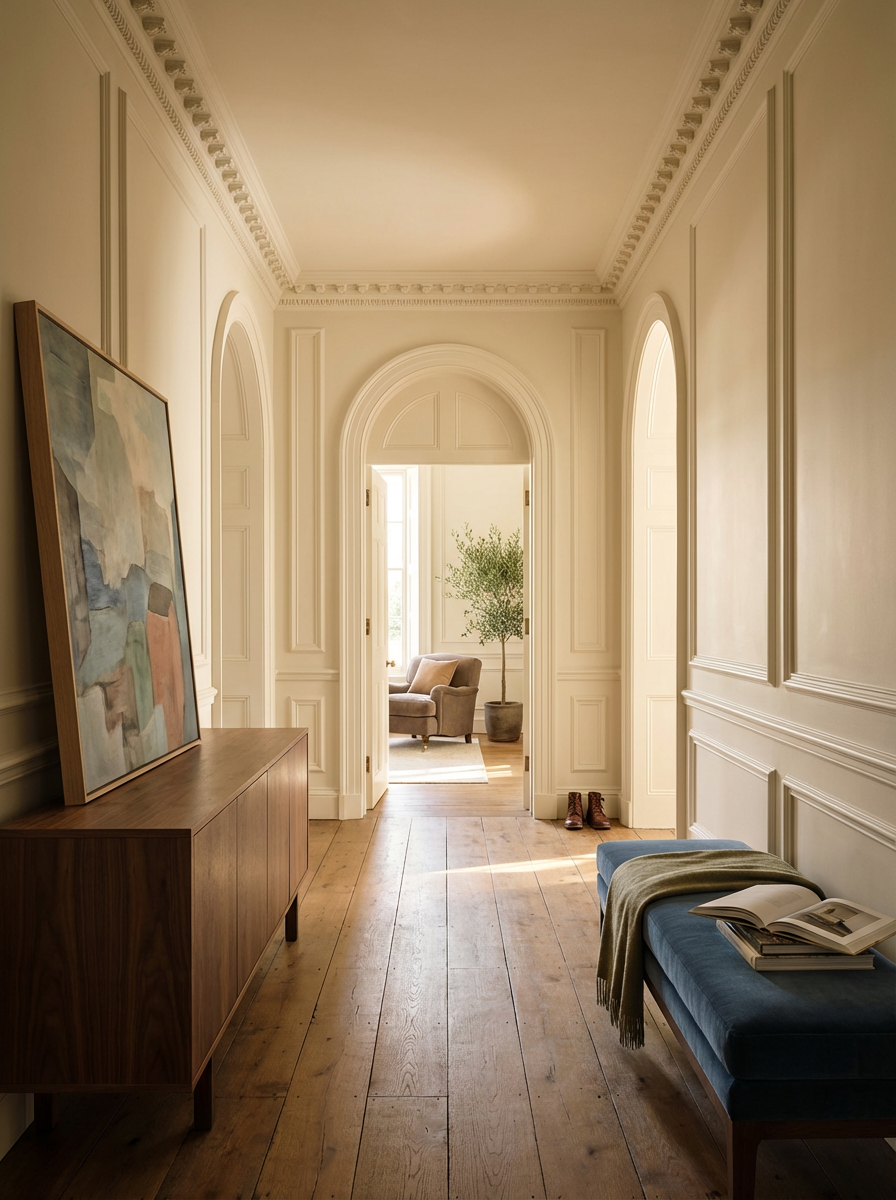
To me, timelessness is not so much a design style, but more about the ability of a design to endure: for it to still work for a family as they grow and evolve, for them to still love it in may years to come, for it not to be failing apart or fraying at the seams. Considered design leads to this, and here is a very brief outline of some of the things I take into account:
Place
A home should be rooted in its location in some way. That doesn’t mean there’s hard and fast rules I follow but to ignore the location completely is a mistake. Picture a beachfront house, a countryside cottage or a city high rise apartment - they will all have a very different approach.
History
The age of the property is another important factor. A panelling style, for example, will be different depending on the age of the home; the most timeless option is of course the one that would have been there originally.
People
A home will only last over time if it is planned carefully for the people within it. Everyone’s lifestyles and priorities are different, and if a home is planned around the way a family needs to use it now (and it is future proofed for any changes down the line) it will likely hold up through the years because it works.
Not only that, homes people love for years usually reflect them: collected objects, meaningful art, books, antiques, colour, memories. That emotional connection is more lasting than trend-neutral schemes.
Materials
Choosing high quality, durable and task appropriate materials is a must. Have a dog that likes to be on the sofa? Children with sticky fingers? Perhaps a performance fabric is best - something scrubbable and hard wearing. For beauty and longevity, I’d choose materials that pick up patina and only get better as they age like marble and unlaquered brass.
It’s also worth questioning, is any design truly timeless? Everything is ‘of its time’ to some extent. Take the classic trench coat for example: a longstanding wardrobe staple originally designed as a lighter, waterproof alternative to military outerwear. Although the garment and its unique features - storm flap, cuff straps, belt etc. - are instantly recognisable and the coat never goes out of fashion, it has undergone many iterations over the years. These changes (length, colour, how fitted or oversized it is, the type of hardware, or even how we style it) all give us a glimpse into a specific period in time. It’s similar with interiors.
Much like the way we dress, our homes are a form of expression - a chance to show our personality and have fun. It’s not about what’s hot right now or what someone else perceives to be acceptable. I wonder if we're too hung up on whether something in our home dates or is a slight giveaway as to when it was designed or decorated? If we love it and it works for us, what’s so wrong with that?
